The Little Ones
Upon hearing Penang Butterfly Farm, I am sure you would think that we are only about butterflies and caterpillars. Actually, apart from dealing with butterflies, we are also doing the breeding and husbandry of other animals in our farm, such as beetles, lizards, frogs and even snails. During the special month of parents’ day, interestingly there are some new born “babies” in our farm as well. So, let’s meet the babies:
Oriental Whip snake

Group photo!
Hi, we are Ahaetulla prasina. We were born on 15th May 2012. Usually, people will call us Oriental Whip snake. We like to stay on tree branches and sleep but we can be very active during daytime. Our body may be a dull colour now but when we grow up, our colour will change to completely green. We like this green colour because we can use it to hide among the leaves on the trees and it is such an elegant colour. Besides that, we like to eat small lizard. When we grow bigger, we will be able to eat other food like frogs and crickets. Our mama is able to produce 4 to 10 of us at a time. That is why we love our mama so much. Because there are many of us, we have to stay separately from our mama. People usually think that we are dangerous but actually we are just slightly venomous and not very harmful to people.
Great Angle Head lizard

I am enjoying my sun basking!
I am Gonocephalus grandis. I hatched from my egg on the 2nd week of May. I am the youngest and I have a brother who hatched a day earlier than me. People call me the Great Angle Head because of my cranial shape when I grow. It is difficult to differentiate me and my cousins, the Bell Angle Head lizard when we are babies. I like sunny day because I can climb up to a tree and enjoy sun basking. In addition, I am an intelligent boy because I have colour-changing ability to camouflage. Sometime, people say that my family is the most aggressive species of the genus. Because of this, I have to stay separately with my parents. But I am not alone because my brother is staying with me. Sometime, I don’t like being photographed, so, I will run around when I see anyone coming.
Cat gecko

Zzzz...
I may be called cat gecko, but I am not a cat. I prefer you call me Aeluroscalabotes felines, it sounds more high class. Do you know that I am the only species within the Aeluroscalabotes genus? I was born on 27th May. I am the youngest gecko in Penang Butterfly Farm. Do you know why they call me cat gecko? It is because when I sleep, I will curl up my tail like a cat. I like to sleep in cool shaded place that is why temperature is very important to me. I sleep in the daytime and I’m active at the night, so you may not see me much during daytime. I have some vertebral striping on my rich coffee-colored brown and bold rust coloration skin. They feed me with the small crickets. Some people ask me why is mama much bigger than papa, I am not sure why, myself but I love them both very much.
Giant Asian Pond turtle

Hello world!
We share the same surname with the Great Angle Lizard – grandis but obviously we are a different genus which is Heosemys grandis. There are 8 of us who hatched out of our eggs on 8th May in the incubation box. We like to eat plant leaves and small aquatic invertebrates. Usually, we use our front leg to tear up the food after we bite them. Do you know how to differentiate if we are a boy or a girl? The boys have slightly concave plastron (lower shell) and longer, thicker tails while the girls have flat plastrons and shorter tails. Due to the high demand of our shell and meat, we are being poached and over-exploited. Therefore, now we are classified as Vulnerable on the IUCN Red List and also listed on Appendix II of CITES. Hopefully, if you stop supporting these products, our species will continue to exist.
Fire snail

I am smaller than the five cent coin!

See how big mommy is!
Can you see me? I am very tiny and I am only around 5mm. I just hatched on the 3rd week of May. I have a lot of siblings and all of us look alike. I am Hemiplecta tweediei. You can call me Platymma tweediei too or Fire Snail if the other two names are too difficult. I am a terrestrial snail and I am one of the mountain species. Generally, I live in high humidity area because I do not like dry area. When you keep me as a pet, you have to make sure that my house is very humid. Usually when I am hungry, I will creep slowly to chew my food like leaf, fungus but mostly I feed on the sweet potatoes. Do you know why people call us Fire Snail? Not because we are hot but because when we grow up, we have bright brick-red colour, just like the colour of fire. Mommy and Daddy’s coal black shell can be as big as 3 inches in diameter! As for me, I am still small, transparent and shy. When I am frightened or when I need to sleep, I will hide in my shell.
Lastly, you have met our cute babies of the month. We hope that they will encourage you to appreciate the beauty of nature and also your parents! Any plans for your parents during this special Parents’ Day? Whether they are near or far do not forget to appreciate them. Lastly, we wish all parents a big “Happy Mother’s Day and Happy Father’s Day.” Hope to see you soon in Penang Butterfly Farm.
Posted in Latest News, Photos, Reptiles |
Don’t judge the smell by its look!
Painted Jezebel, February 21, 2011
For the past few days, there’s an awful smell at a particular spot in the garden. Smelling it will make you imagine a dead fish at the beach shore surrounded by excited flies. Who would have guessed the odour comes from this beautiful thing:


Meet the Bulbophyllum beccarii, a rainforest orchid, apparently found in South East Asia. Wikipedia reported that it grows in Borneo. What makes this stinky fellow special, is that it blooms only once a year, or even as rare as once in 2-3 years. The stench is said to attract flies. However, i spotted a lacewing butterfly coming to it.. hehe.


Their huge leaves positioned themselves in such a way that it forms a ‘bowls’ that will trap falling debris as nutrients.

Well, take a good look at while it’s still blooming. You won’t see (and smell) it till next year!
Posted in Photos |
2nd Butterfly & Insect Photographic Competition Winners!
Congratulations to all our winners!!!
1st Prize Winner – Eddie Chuah Seng Kim
2nd Prize Winner – Chuah Huat Beng
3rd Prize Winner – Teoh Siang Hooi
Consolation Prizes
Tan Cheong Pheng
Tan Meng Teong
Eric Ooi Kar Chuan
Wong Chee Seng
Chua Choon Sen
Lim Kien Hock
Chin Poh Check
Ong Pang Wei
Lee Xiao Mei
Ooi Oon Thong
Tags: photography
Posted in Photos |
The 2nd Butterfly & Insect Photographic Competition Is Here!!!
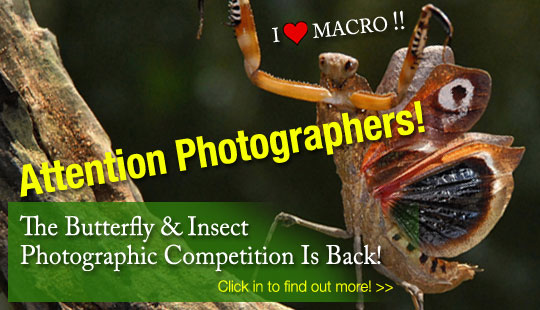
Good at photography? Like MACRO photography? Wanna shoot some insects, reptiles, arachnids, mantises, and other creepy crawlies? This is your chance to win a prize and get to shoot wild insects and animals that you may have never seen before!
- Competition period is from 15 October – 17 November 2010.
- Special sessions will be arranged so that you can shoot those rare and exotic insects and animals!
- Many prizes to be won!!
Don’t miss this rare photography opportunity! So come quickly join the 2nd Butterfly & Insect Photographic Competition !!!
UPDATE 23 OCT 2010 – We ammended our Rules & Regulations to allow for more participation. Thank you to those who give us more feedback for improvement. Please see the updated rules and regulations. Try refreshing your web browser if you see no changes (CTRL + F5 / F5).
Tags: photography
Posted in Latest News, Photos |
蛙鸣…….
不知你有否察觉到每逢雨后, 总听到 “呱呱~呱呱呱” 之声此起彼伏?
这时的你是抱着怎样心态来看待这些 “噪音” 呢? 是感到烦躁吗? 是感到愉悦吗? 会引发你诗性大发吗?有勾起你一些小时候的记忆吗?或是你一直都是城市小孩, 不曾听闻过这种音乐? 不管你是属于哪种心态, 我也想把我知道关于青蛙小子的一段故事与你分享:
我们华人结婚, 喜欢挑选黄道吉日才进行婚礼, 但是蛙蛙家族却喜欢选择在下雨天来进行婚礼。 这是因为蛙蛙们的皮肤最喜欢潮湿了, 且在潮湿的环境下能呼吸得更顺畅, 心情也更显欢愉。 也因如此, 青蛙小子会在凉夏雨后更卖力起劲的扯开咽喉大声歌唱:“呱呱呱。。呱呱呱。。呱呱呱呱呱呱呱。。” 。 通常鸣声开始不久后, 陆续会有另外几个蛙小子也加入了雨后合唱团, 不一会 “呱呱” 之声仿有节奏的充斥着整个夜晚。 仔细聆听, 你会发觉蛙鸣的旋律并不单调, 时而洪亮如钟, 时而温语绵绵, 时而声沉如鼓, 时而婉转悠扬,时而浑厚绵延, 虽然鸣声节奏不一,但却都很巧妙的融合为一,奏演成凉夏最棒得交响曲。
如果我对你说, 这种种歌声都有着不同的诠释意思, 你相信吗? 是真的! 每只青蛙小子都拥有不同的歌声, 但内容大致是向青蛙小妹告白求爱;而青蛙小妹喜欢哪一种告白情歌, 就会凭歌挑选自己中意的蛙小子来结婚。不相信吧, 其实青蛙们很早就崇尚自由恋爱的啦!
在这则短文里, 我们能得到什么启发呢? 我本人觉得大自然的声音其实是充满着智慧的;就以听似吵躁不堪的呱呱声, 原来是青蛙们必须履行的任务, 蛙儿不呱叫, 又哪娶到美人归呢? 青蛙小子特意选择在宁静的夜里鸣叫, 因为这样才能使自己的叫声传的更远, 让更多的青蛙小妹听到自己的求爱召唤。 所以, 同为地球上一份子的我们, 是否也应该为青蛙家族的这桩喜事而感到高兴, 并献上祝福给这些新人, 而不是把它们标签为唯恐天下不乱的不良分子,一味毛躁地认为青蛙总是喜欢损人利己的制造噪音、扰人清梦?
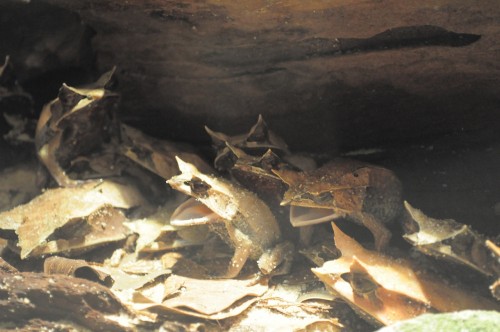
雨夜合唱团 😉
Posted in Photos |
World Snake Day at Penang Butterfly Farm
In conjunction with World Snake Day that falls on the 16th of July every year, Penang Butterfly Farm would like to celebrate the occurrence of this day by creating awareness and highlighting the importance of snakes.
Due to urbanization hitting up in Penang and the generally bad impression the public has of snakes, snakes have been dying off at alarming numbers. Snakes losing their habitat often find new snake dens in gardens, chicken pens or basements. This puts snakes in danger of coming into contact with humans as almost all such encounters will result in the snakes being killed on sight. There have been instances where snakes “trespass” on human habitations causing some destruction and having their heads smashed off as a result. Vigilante such as this can be avoided if people are more aware of snake behaviours. The general consensus is fear, people kill to protect themselves from what they see as threats.
Despite appearances, snakes are quite harmless. Most snakes are not venomous and would escape rather than attack when confronted with humans. Let us in this day look at our slithery friends in a different glance as Penang Butterfly Farm celebrates World Snake Day with our gliding pals in enclosure!
Mangrove Snake

Also known as Cat-eyed snakes, they are generally thin, long bodied with large heads and large eyes. They vary greatly in pattern and color. Many species have banding, but some are spotted and some are solid coloured. Colours are normally black, brown, or green with white or yellow accents.
They are primarily arboreal, nocturnal snakes that prey on various species of lizards, birds, and rodents. Their venom toxicity differs from species to species, but it is not considered life threatening to humans.
Wagler’s Pit Viper

One of the venomous pit viper species native to Southeast Asia, they are sometimes referred to as the temple vipers due to their abundance in the Temple of Azure Cloud in Malaysia. These tree dwellers are active at night and appear sluggish as they remain motionless for long periods of time waiting for preys to pass by. Nevertheless when preys do pass by or of disturbed, they can strike quickly. Their primary diet consists of rodents, birds, and lizards. The pits on the sides of the head are capable of detecting temperature difference of as little as 0.003 degree Celsius. Their venom is non fatal to humans.
Red – tailed Racer
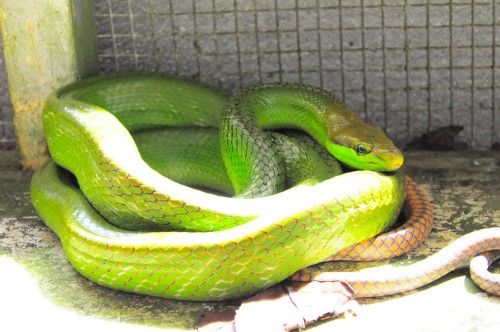
Red – tailed Racers inhabit the tropical forests. These tree living snakes are active at day and spend the largest part of their life on trees. They have powerful, rough scales which are ideal for climbing and moving in trees. On their back, they have small, green smooth scales with red or brown tail and a dark line horizontal across its eyes. These types of snakes seldom descend on the ground and they feed almost exclusively on birds. When stressed, they may inflate a bag of air in its neck, making them appear larger in size.
Green Whip Snake

These snakes have enlarged teeth at the back of their jaws that can administer a rather painful bite. Lizards and birds form the mainstay of their diet. They are slender – about 2 cm thick, and have a length of about 1.5 to 2 meters. Their tails are long, used mostly to hold on to trees while reaching for preys. The green whip snakes have two larger teeth at the back of their mouth; these teeth will permit toxic saliva to penetrate wounds to immobilize prey which is then rapidly swallowed. Once the prey is completely in the snake’s body, the whip snake searches for a resting place – usually in the highest point of a tree. Their behaviour towards humans is neutral and the snake usually goes to the other end of the terrarium.
The Importance of Snakes:
Snakes are vital in controlling crops damaging preys such as rats and mice. Some, like the sea snakes and pythons, are caught extensively as food in Asia but, although most are probably edible, snakes are not widely hunted for their meat. Their skin though is used widely for belts, bags, and shoes. Venom is removed from snakes for use in treating certain diseases and to make antivenin for snakebites.
Snakes are one of the several groups of reptiles. They have long, slender bodies, no legs, no eyelids, no ears, and are covered in back-folded skin sections called scales. Like other reptiles, they use their surrounding heat to regulate their body temperature. Snakes’ flexible bodies allow them to stretch out to warm themselves, curl up to conserve body heat, or just warm a particular part of their bodies. They are found on land and in water, as well as in every habitat imaginable, except where it is very cold.
Do you know that some snakes can move faster than humans?
Black Mamba can travel at speeds up to 12 mph compared to the average human who can run at about 6-8 mph. However, snakes on the whole are slower than humans as they have less stamina.
Interesting Facts about Snakes:
• An angry snake often curls up in an *S’ shape
• If a cobra raises its head, it doesn’t mean it is angry, unless the angry cobra expands its head
• Snake’s eyes are covered by clear scales rather than movable eyelids; therefore, their eyes are always open
• Snakes have thermal vision, they see heat and movements
• Snakes cannot taste anything, and does not chew
• They repeatedly flick out their narrow, forked tongue to bring odours to their sense organ in the mouth
• Snakes might not eat also during shedding
• Snakes use Lateral Undulation, moving in wave like motion, in water and on land
• Viper on the other hand will side-wind or move its body segments in one direction while remaining contact with the ground
Hopefully with more awareness raised on our gliding cohabitants here, more compassion hence more lives can be spared on one of the most misunderstood creatures in our planet! HAPPY WORLD SNAKE DAY!
Posted in Photos |
星期二, 二零一零年四月十三号
二零一零年四月十三号
夜探浮罗山背…
如果你是马来西亚人, 哪每当其他人一提起浮罗山背, 第一样浮现在脑海的肯定 是 “红虾”, “葫芦”,”长耳朵”, “11号” 或是近来最火热的 “林冠英” 。。。。
呷!哪是什么意思啊??
对啦! 这全都是槟城州最出名的榴櫣品种啦。。。
有朋自远方来, 不亦乐乎!! 我身为东道主, 当然要一尽地主之谊, 为朋友们张 罗吃喝玩乐一番。是晚, 尝完了“世界的尽头” 海鲜坊的海鲜餐后, 朋友说想探一 探浮罗山背的丛林。
呵呵呵! 是的! 你没听错!!我的朋友是要夜探浮罗山背的丛林!!
于是, 我只好call 齐人马,办好夜足装备, 一行7人浩浩荡荡的往浮罗山背的山林 出发。 晚间九点的山林, 凉意阵阵迎面袭来, 心情不觉轻松平静了下来, 只是四 周乌漆麻黑一片, 所谓今步不知前步路, 大家手拿着电筒, 排列成直线, 开启了 我们众乐乐的寻虫游戏。
穿行于5–6尺高的茅草间, 每步行一步,两 侧必发出吱沙吱沙茅草相互拍击的声音,期 间还不时夹有蟀鸣虫叫, 原始的青涩草味也 遍布四周, 这不就是大自然特有的味道吗?
一众人寻寻觅觅, 时不时都有所发现, 一会毛虫, 一会拦路虎甲, 一会小蛇盘卷 在枝头, 只可惜我们带去的相机没电, 所以没能把我们发现的猎物一一上载列明 与大家分享。
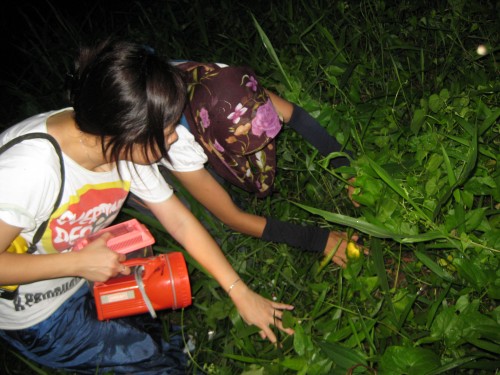
拨开茅草见什么??? 小蟋蟀, 小甲虫, 小蚱蜢咯 ;-)
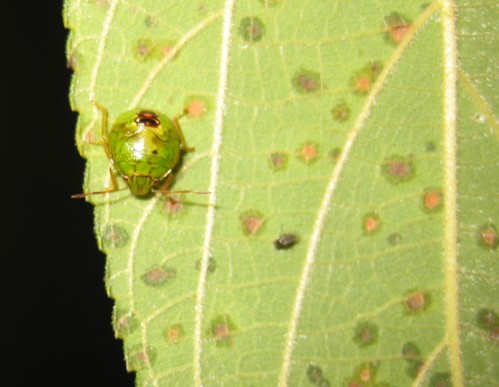
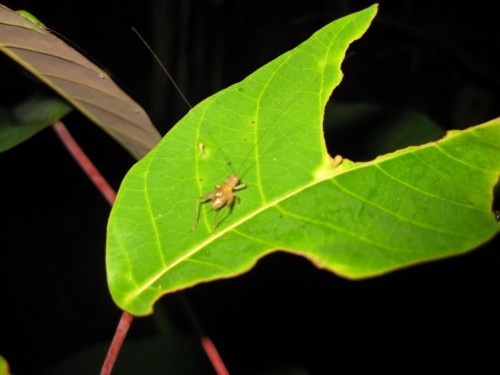
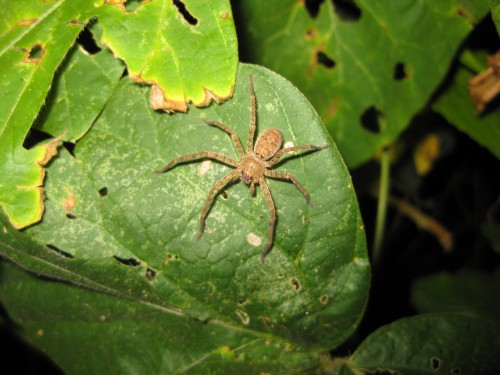
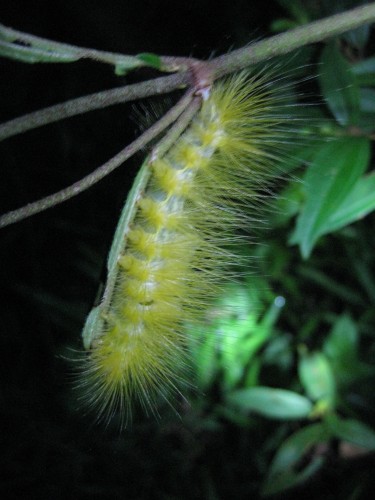
你知道毛毛虫这个词是怎么来的吗? 全因这个Look 咯!!
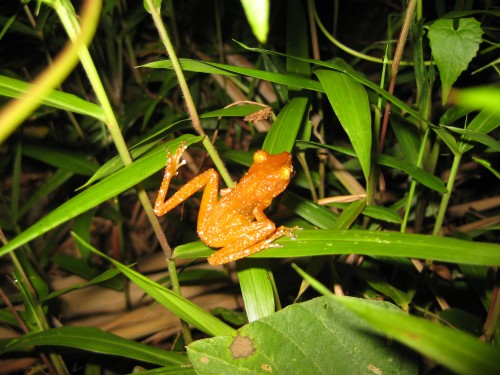
鲜橘色的热带蛙, 体长只有3cm
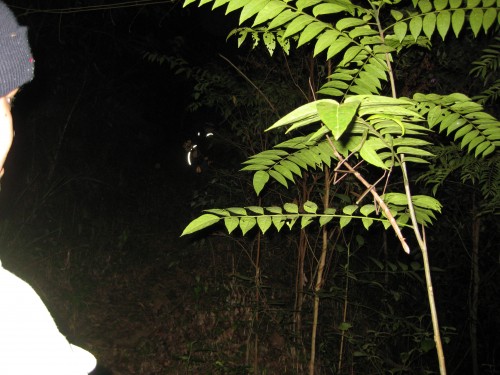
细细长长的枝干怎会一直摇摆不停并有往上移动的感觉?是我们眼花还是?????莫非。。。。。
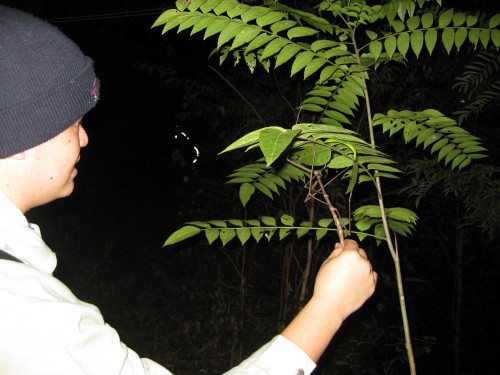
哈哈!原来就是难得一见的足节虫啦, 而且这还是槟城最长的足节虫品种, Phobaeticus serratipes 呢!
在一众我们发现的物种当中, 我想特别介绍 蚰蜒这种生物:
蚰蜒
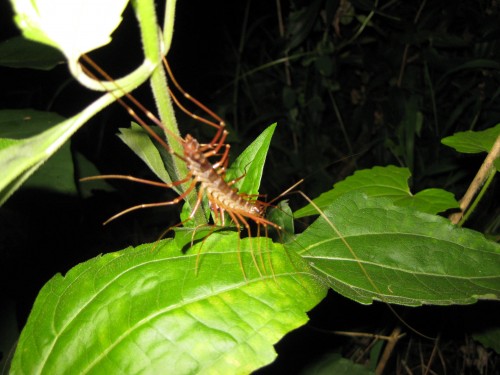
蚰蜒
为节肢动物的一种, 因外形与蜈蚣极为相像, 故常被人误认为 危险毒物。 蚰蜒俗称“钱串子“,古时称“草鞋虫”,有的地方称“香油虫”。蚰蜒 的前爪能分泌毒液,触及人体皮肤后即可致 局部疱疹,但不会致命。 它行动敏捷,多生活在房屋内外的阴 暗潮湿处,多捕猎蚊蛾等 小昆虫为主食。当蚰蜒的一部分步足被捉住的时 候,这部分步足就从身体 上断落下来,使身体可以 逃脱,这是蚰蜒逃避敌害 的一种适应。
本解取自百度百科。
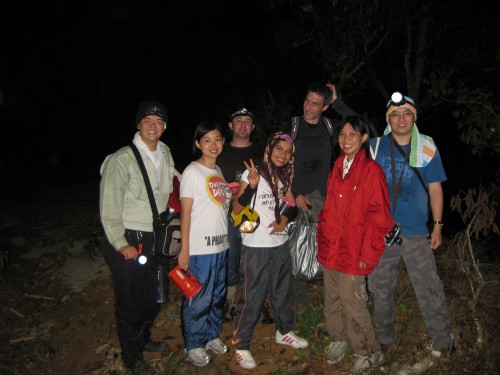
七剑客
Posted in Mother Nature, Photos |
Huge Nepenthes Growing in Teluk Bahang
A few days ago some huge Nepenthes were found growing in Teluk Bahang. So if you ever come to Teluk Bahang, don’t be shock to see large giant structures like this and the 3-horn rhino beetle at Penang Butterfly Farm.

This structure shows 3 different species of Nepenthes (monkey cups) that we have in Malaysia – Nepenthes albormaginata, Nepenthes ampullaria and Nepenthes gracilis.
In fact, there are just so many kinds of monkey cups in the wild. If you want to see various kinds of Nepenthes without going into a jungle, you can just come to our farm as we have plenty of species on display as we have at least 15-18 different species on display everyday. Some of the species that can be seen in our farm are (if you are lucky enough to spot them):
Nepenthes albomarginata
Nepenthes ampullaria
Nepenthes albo X ampu
Nepenthes sanguinea
Nepenthes rafflesiana
Nepenthes gracilis
Nepenthes gracillima
Nepenthes ampu X mira
Nepenthes anamensis
Nepenthes bellie
Nepenthes bicalcarata
Nepenthes distillatoria
Nepenthes eustachya
Nepenthes fusca
Nepenthes hirsuta
Nepenthes longifolia
Nepenthes mirabilis
Nepenthes veitchii
Nepenthes ventricosa
Nepenthes maxima
Nepenthes anamensis
Nepenthes sumatrana
Nepenthes sibuyanensis
Nepenthes bicalcarata
Nepenthes albomarginata
Nepenthes ampullaria
Nepenthes macfarlanei
Nepenthes albomarginata
Tags: monkey cups, nepenthes
Posted in Photos |
Can We Keep Them Alive?
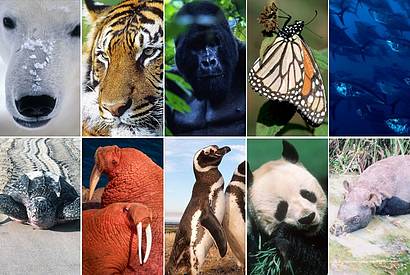
WWF recently highlighted 1o popular species that are most threatened in the world, to be watched in 2010. The year 2010 has been declared The Year of Biodiversity by the United Nations. Many years back, governments had pledged to effectively reduce the rate biodiversity loss by 2010, but it seems the rate of loss of nature and its biodiversity is apparently at an alarming rate and furthermore accelerating. So dear humans, what are we going to do about it? Are we looking at emitting more carbon, claiming more natural land, harvesting more from the forests and expanding our cities this year?
Here are some numbers and facts I summarised from WWF:
Polar Bear (Ursus maritimus) – too close to extinction.
Tiger (Panthera tigris) – only 3200 left.
Pacific Walrus (Odobenus rosmarus divergens) – As temperatues rise, they lose their habitat. Hundreds die each year.
Magellanic Penguin (Spheniscus magellanicus) – Rapidly decreasing for the same reason for theWalrus.
Bluefin Tuna (Thunnus thynnus) – no numbers for this, but this is your tuna sushi served at every japanese restaurant.
Monarch Butterfly (Danaus plexippus) – there are just too many insect species to list which are going into extinction.
Leatherback Turtle – only 2300 females left.
Mountain Gorilla – only 720 left.
Javan Rhinoceros – only 60 left.
Giant Panda – only 1600 left.
Planet Earth is in a phase called the The Sixth Great Extinction, where all the previous five extinctions were thought to have been caused by asteroids and the last was 65 million years ago. Unfortunately, this time’s great extinction, which is not so great to hear at all, is caused by humans.
You have in your hands the power to protect or destroy all life on Earth. I urge you to do something.
Read more and spread the awareness:
WWF
IUCN Red List
Warning to Humanity
Union of Concerned Scientists
The Sixth Great Extinction
Endangered Species Coalition
Posted in Photos |