Malaysia Day Special : Bunga Raya
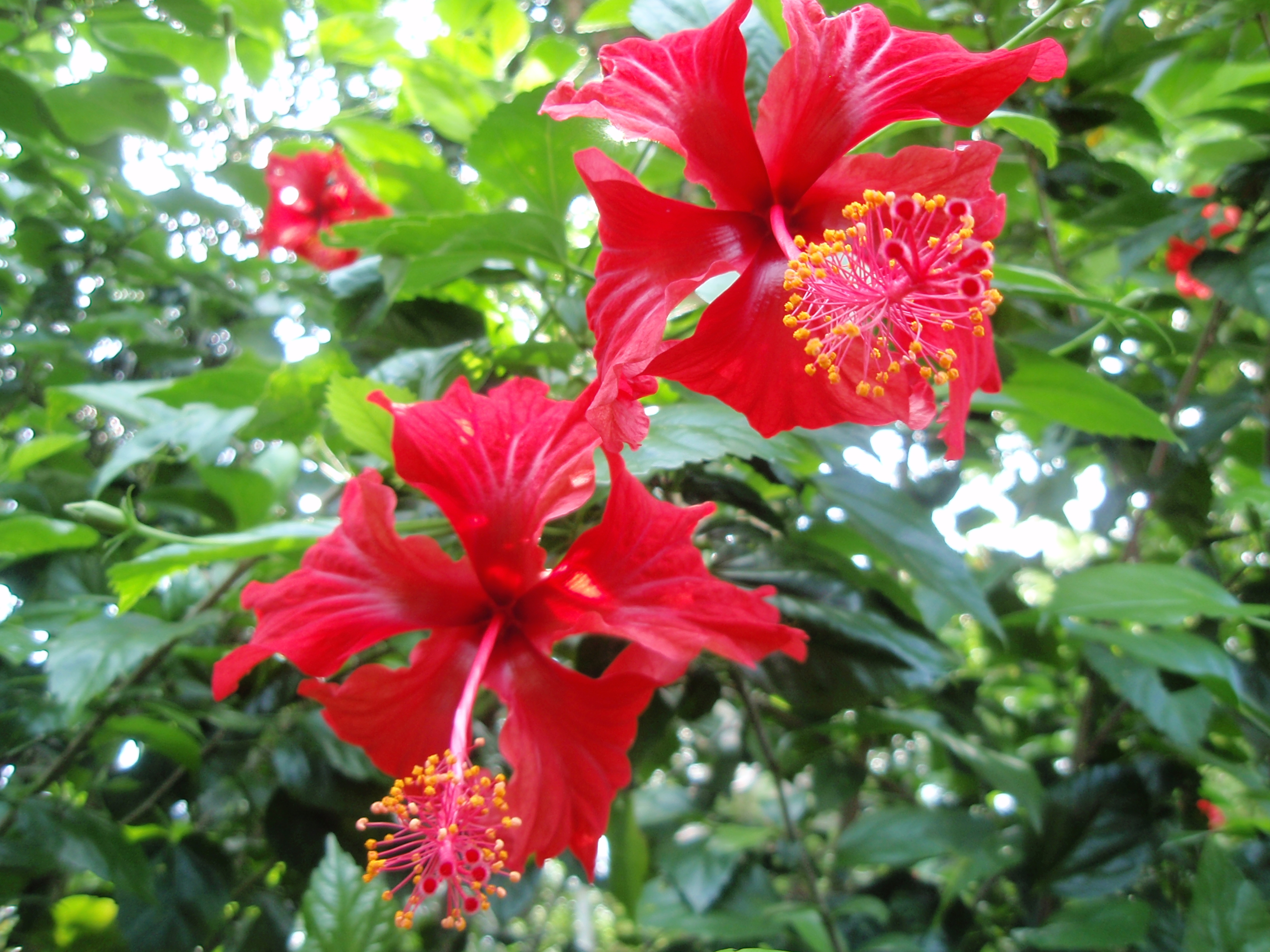
Its impossible to not notice their loud colour with brilliant anthers and stigmas shooting out of the petals like bursting fireworks. That’s our National Flower, the Hibiscus, or what we called Bunga Raya in Bahasa Malaysia. Let’s study a little Bahasa Malaysia, shall we? ‘Bunga’ means flower while ‘Raya’ means great, grand or large. And if we put in the affixes me- and -kan, ‘merayakan’ means to celebrate. A pretty glorious name for a flower, right?
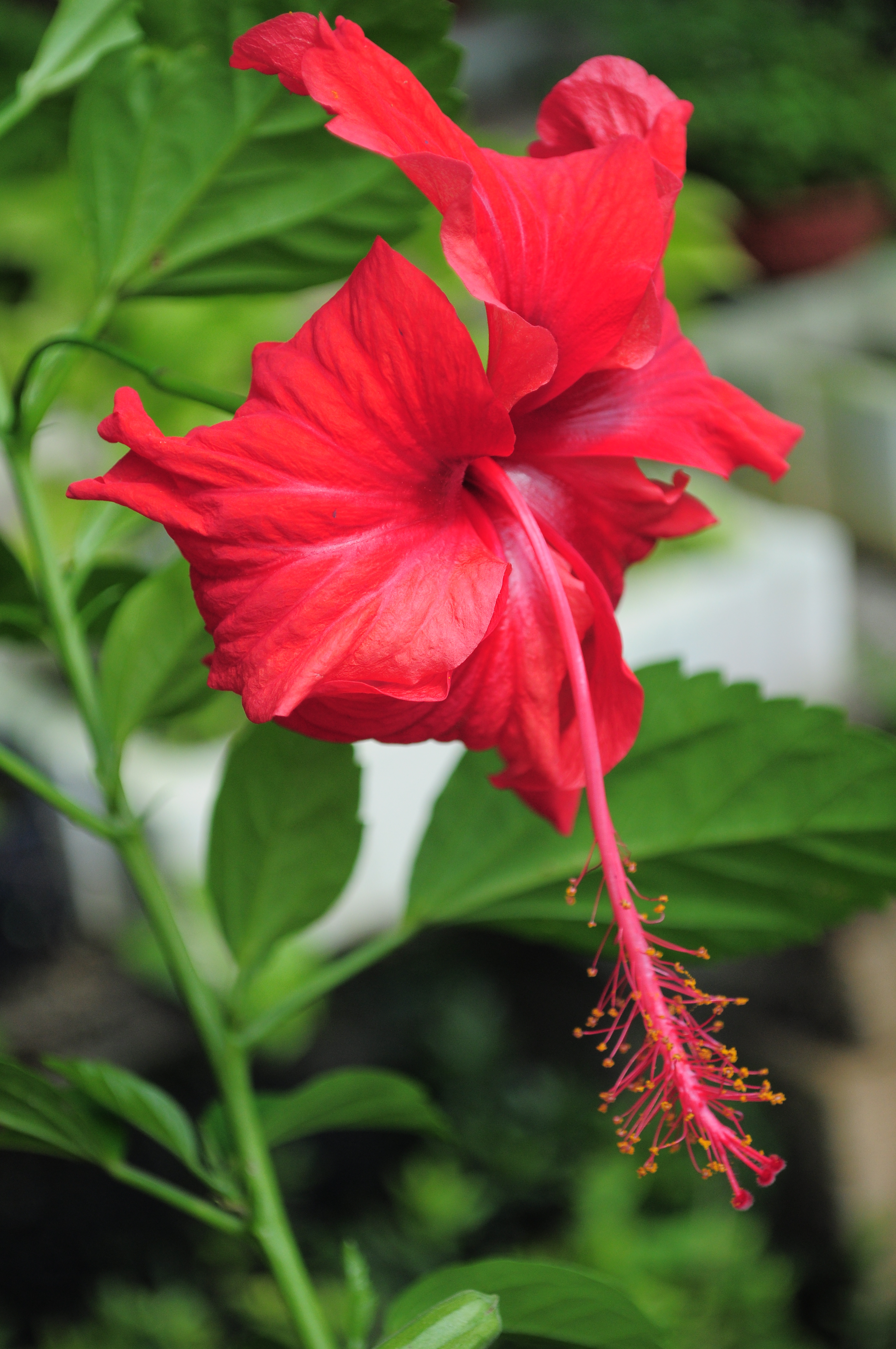
Bunga Raya is Malaysia’s national flower, as declared by Tunku Abdul Rahman on 1960 due to its abundance throughout Malaysia. Their bold red colour symbolizes courage, while the 5 petals symbolizes the 5 Rukun Negara (National Principles of Malaysia). Bunga Raya is believed to be introduced into Malaya around the 12th Century as an ornamental plant, possibly from China, as their scientific name literally means “Rose of China”. The origin of the plant is believed to be from Hawaii.
Bunga Raya are easily found in many parts of the world, particularly in the tropical countries, and thus, there are many different common names for Bunga Raya. In the Western World, they are called the Hawaiian Hibiscus, while they’re called ‘sembaruthi’ in Tamil, Guamamela in Tagalog, and in Indonesia, they’re known as “kembang sepatu” which means “shoe flower”.
Apart from being used as an ornamental plant, there are surprisingly a lot of interesting uses of Bunga Raya. The Chinese use it for medicinal purposes, while the Hindus use it to worship the goddess Devi. The flowers are actually edible and in the Pacific Islands, it is one of the ingredients in their salad!
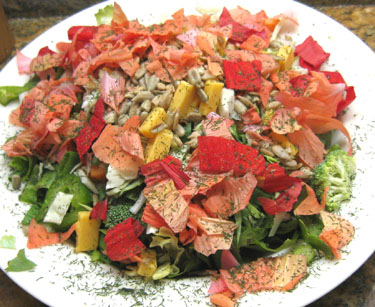
- Hibiscus Salad (Photo by Ginny Stibolt: http://www.sky-bolt.com/edibleflowers.htm)
Isn’t our National Flower interesting? Well, hopefully you’ll appreciate them more the next time you see them on the Ringgit notes and coins. Happy Malaysia Day to all Malaysians!
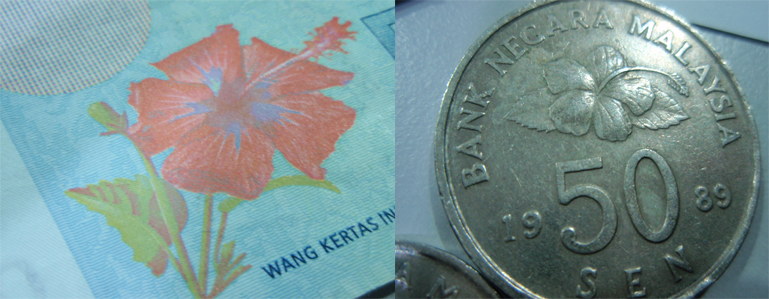
- Bunga Raya on Malaysian currency
Posted in Plants & Flowers