Understanding Genetic Engineering & Its Future Prospects
Today, as the world is heading into an era of high technology and mass development, our natural environment is being exploited without our realization. The land once we had as farms, are transformed into a fortress of steel, concrete and cement. What more as the quality of human health has improved tremendously over the years, regarding to new discoveries and technologies being introduced into the medical world.
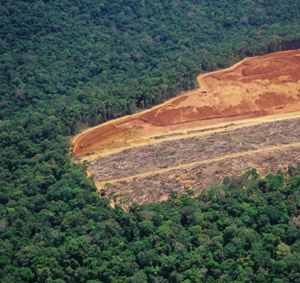
Deforestation
Studies have shown that the human population is exponentially rising with the ratio of human birth outstands to the ratio of human death. Therefore in order to support these alarming rise in the human population, more food must be produced for human consumption.
According to studies from the UN Food and Agriculture Organization, it estimates that farmers will have to produce 70% more food by 2050 to meet the needs of the world’s expected nine billion population. That amounts to one billion tons more wheat, rice and other cereals and 200 million more tons of cows and other livestocks.

Are we heading in this direction?
However the controversial takes place to cater to the uprising human populations with dwindling farm land. Is there solutions for these problems?
Yes, scientists have introduced new approaches to cope with these problems. The introduction of genetic engineering to produce genetically modified food. Genetic engineering is the introduction of a selected DNA(Deoxyribonucleic acid) to an organism to improve and enhance its trait for mankind’s benefit and interest.

Genetic engineering - scientist in laboratory, GMO testing experiment

Illustration of introducing selected DNA to host DNA
Actually breeding was the conventional way of genetic engineering. Humans modify food organisms include selective breeding; plant breeding, and animal breeding in order increase the quality of their food product. For an example, cows were selective breed with others species of cows (interspecies mating) to enhance the quantity and quality of its milk, meat, immune system and maturation process.
What sort of genetically engineered food are available and are they safe?
Foodstuffs made of genetically modified crops that are currently available (mainly maize, soybean, and oilseed rape) have been judged safe to eat, and the methods used to test them have been deemed appropriate. These conclusions represent the consensus of the scientific evidence surveyed by the International Council for Science (ICSU) and are consistent with the views of the World Health Organization (WHO).


There are 5 steps involve in these process

Step 1 – Plasmid is isolated from the bacteria.
- What is a plasmid?
Plasmid is a DNA molecule that is separate from, and can replicate independently. - Why do we use a plasmid?
It acts as a transporter whereby it carries the desired gene which was initially incorporated in the coding region(in red). - What is a coding region?
Coding region is the region whereby the desired genes located which are later fitted in like a jigsaw to the plasmid region.(in black).There are 3 regions which are the promoter(beginning),marker(middle) and terminator(ending). - Why only bacteria plasmid used widely in genetic engineering?
It is because bacteria is a simple cell, therefore the process of identification and isolation is simple and effective. Another reason is that the plasmid has got a virulence factor corresponding exclusively to Agrobacterium. - So what is the function of these virulence factor and where is it located?
The virulence factor plays an important role in incorporating the plasmid into the host cell and its located in the plasmid itself nearby the coding region(in red).Therefore it helps the plasmid to get incorporated into the host genome(plant cell) - How is the bacteria plasmid going to be inserted into the host genome?
There are several ways to transfer a recombinant plasmid inside the host genome. The best way is using a microprojectile gun. It function is as similar to a gun, but instead of bullet, plasmid is used as a replacement. - How are we suppose to know where is the plant genome?
The genome is located in the nuclei of the plant cell. Further magnification can be viewed by using the electron microscope
Step 2 – The recombinant DNA carried by the plasmid are incorporated into the plant cell.(using the microprojectile gun)
Step 3 – Those transformed plant cells are suspended on a media to undergo plant cell culture under aseptic conditions.

Genetically modified plants grows inside petri plate with sufficient nutrient given
- What is a media?
A media acts as a reservoir of nutrients containing essential enzymes and hormones which would induce cell growth. - What is aseptic conditions?
Aseptic conditions means sterile conditions, whereby these whole cell culture should be free from contamination and carried out in fume hoods. - How to identify the growth of these plant cell?
These cell plants undergo differentiation to form a callus which as they are totipotent.
What is a callus?
A mass of undifferentiated cells derived from plant tissue (explants) - What is totipotent?
Is the ability of a single cell to divide and produce all the differentiated cells in an organism. - How are we going to mass produce these single cell plant culture?
Subculturing - What is subculturing?
The original cell culture on the media is left to differentiate to form a callus.The callus is later sliced to several pieces and suspended on different plates containing the same amount of nutrient and enzymes. This will lead to mass production of the new genetically modified plants.
Step 4 – Plant regeneration?
- How do we evaluate when the plants regenerate?
The formation of stem, leaves and roots are visible.
Step 5 – Plant acclimatization?
- What is plant acclimatization?
It is the adaptation period of the plants being exposed to the natural climate, corresponding to temperature, moisture, humidity and photoperiod.
The positive sides of genetic engineering
High demands are promised for genetically modified crops. Native rice strains have helped to save rice crops from the impact of disease and pests. Wild wheat have helped save commercial crops. Crops can be grown where they have never grown before. It is here that the rural poor scrape out a weak existence and wildlife clings to a last place of refuge. High benefits of genetically modified crops include the ability to resist herbicides.
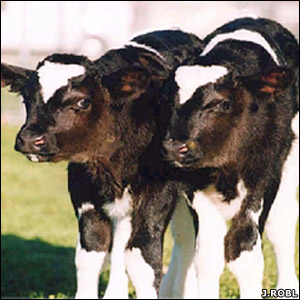
Calfs engineered for leaner meat

Genetically modified corn(herbicide resistance)

Genetically engineered bacteria used for vaccination
Negative side of genetic engineering
Genetic engineering also have raised lots of negative implications via the years of its introduction. One of the organisms which are affected by these technology is the Monarch butterflies. Studies has shown pollen from genetically engineered corn plants is toxic to monarch butterflies.(May 20,1999,Nature’s Magazine).


- But how are these butterflies affected from a pollen of a corn??
- These corns were genetically modified by insertion of a toxin from a potent bacteria called Bacillus thuringiensis (Bt).
- Why was the corn genetically modified to carry these toxins?
Mainly for pest control. It is because to prevent insects attack which may affect the productivity of the corn.
- How do these butterflies take up the toxin from the pollen?
Corn plants produce huge quantities of pollen, which dusts the leaves of plants growing near corn fields. So the caterpillars of these Monarch butterflies which dwells on the milkweed leaves nearby happen to consume these deadly pollens without their realization.
- What are the effects of these genetically modified grains (Bt corn)to the caterpillars and the Monarch butterflies?
The Nature study found that close to half the monarch caterpillars that fed on milkweed leaves dusted with Bt corn pollen died. Surviving caterpillars were about half the size of caterpillars that fed on leaves dusted with pollen from non-engineered corn. The same case study was implied with the monarch butterflies and the results proved similar which is mortality.

Monarch caterpillar
The beauty of these monarch butterflies is that their noted for their remarkable annual migration, which takes them from central Mexico in the winter to as far north as Minnesota in the summer. In the summer months, the Midwestern corn belt is home to about half the US population of monarch butterflies.
According to Dr.Rebecca Goldburg “It would be tragic if genetically engineered crops decimated populations of monarch butterflies similar to the way that DDT decimated populations of bald eagles and other birds,”

Dead Monarch Butterflies from Bt toxin poisoning
Therefore stringent laws should be re-enforced and the Environmental Protection Agency (EPA), which regulates pesticides, must take action to protect monarchs from poisoning by Bt corn.
Future hopes
Genetic engineering is definitely a great breakthrough in terms of substituting land scarcity for agriculture and eradicating starvation.But one should also never neglect and exploit mother nature in order to sustain a balance and healthy ecosystem.
However it would be a great breakthrough to experiment the glowing effect of butterflies as they are magnificent insects. It is definitely a great opportunity to carry out a research by incorporating the genes of the glowing jellyfish into the wings of the butterfly to produce a glowing butterfly. Wouldn’t it be great and beautiful to see such a magnificent creature glowing. I personally feel that it would one of the most beautiful creature ever to be witnessed.

Glowing butterfly concept
Posted in Food |
Dine & Draw at Penang Butterfly Farm’s Papilio Cafe

Mummy, look at my drawing...

Creativity and expressive!
Posted in Butterflies, Food, Latest News, Mother Nature, Photos |
Dine with Butterflies at Papilio Cafe!
Have you ever catch a sight of a Rajah Brooke butterfly while sipping coffee? Finding a place to unwind for the weekend?
Those of you who might have visited us lately would have realised that our new Papilio Cafe is now open and you can have a meal or perhaps just coffee with butterflies fluttering beside you. Papilio Cafe being located inside of the Penang Butterfly Farm is a relaxing place for visitors or tourists to enjoy food yet a chance to observe nature. Local dishes such as Nasi Lemak or Chicken Rendang are served here as well.
Apart from enjoying our natural garden with butterflies, we offer great packages for kids & families as well such as Butterfly Birthday Bash (with a FREE mystery insect gift for the birthday child), Hand & Face Painting, Caterpillar Egg Hunt Game, The Wild Wild Guess Game (I like this game!), Insect Petting Session, Pebble Painting Workshop, Butterfly Release and many more! To make a booking, please call Ms Chong / Ms Kyra o4-885-1253.

Papilio Cafe is Now Open!
Tags: food in penang, nasi lemak, penang cafe, penang food, penang restaurant
Posted in Butterflies, Food, Latest News |