Penang’s Iconic Destination Begins Transformation
Penang Butterfly Farm closes its doors to make way for a major redevelopment.
Follow its journey to transformation at http://butterfly-insect.com
Watch out for its emergence in December 2015!

Posted in Butterflies, Events & Workshops, Latest News |
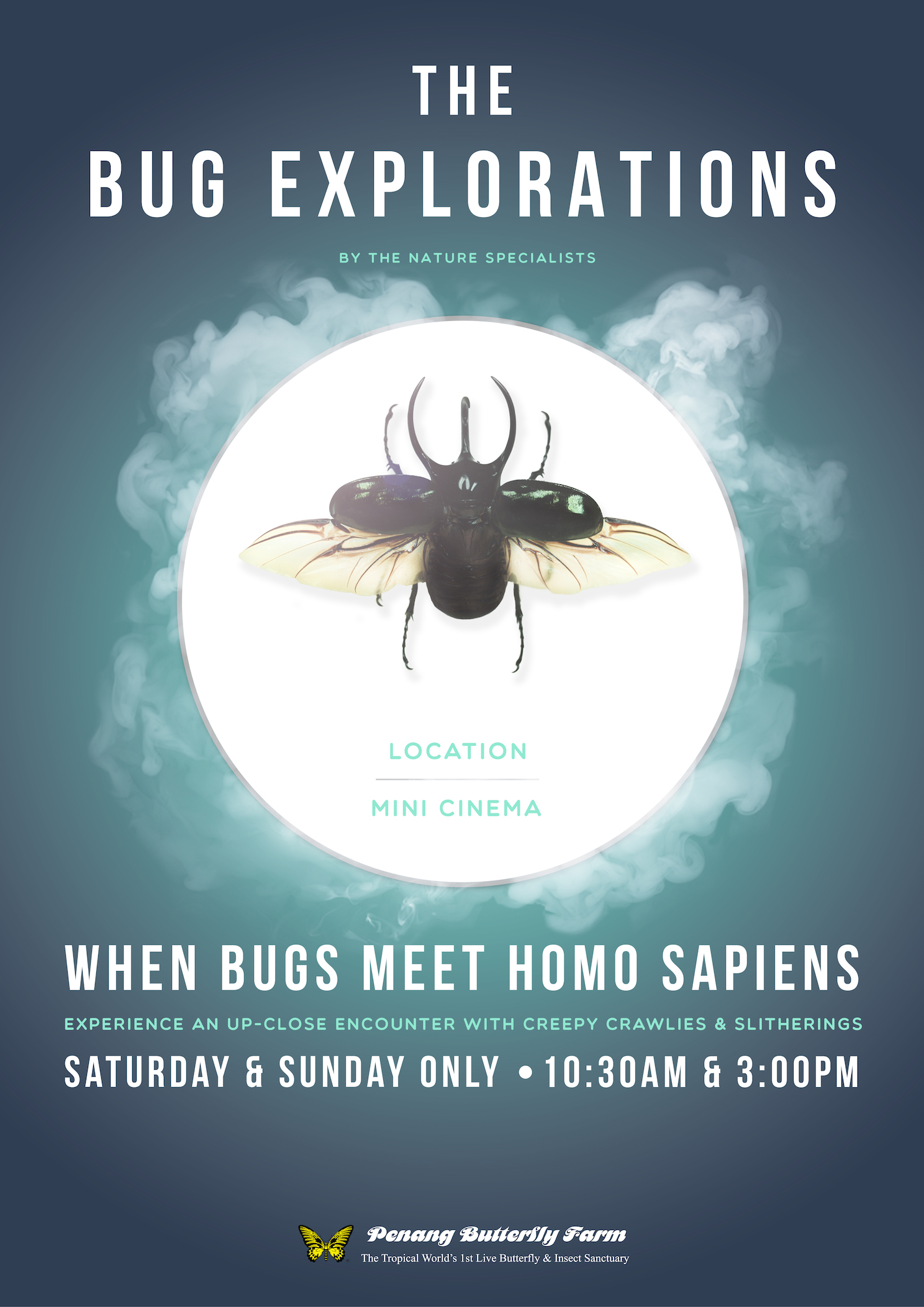
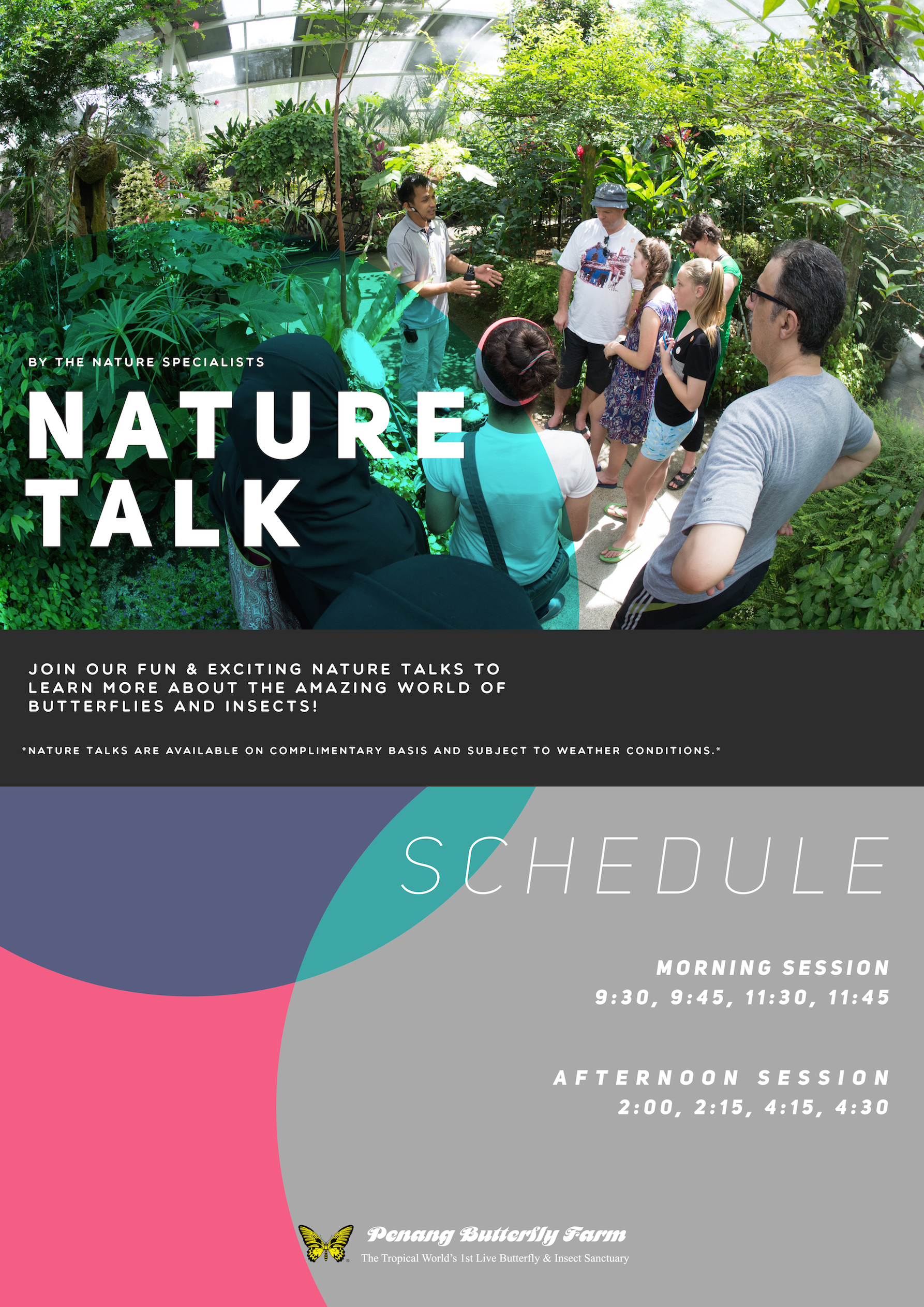
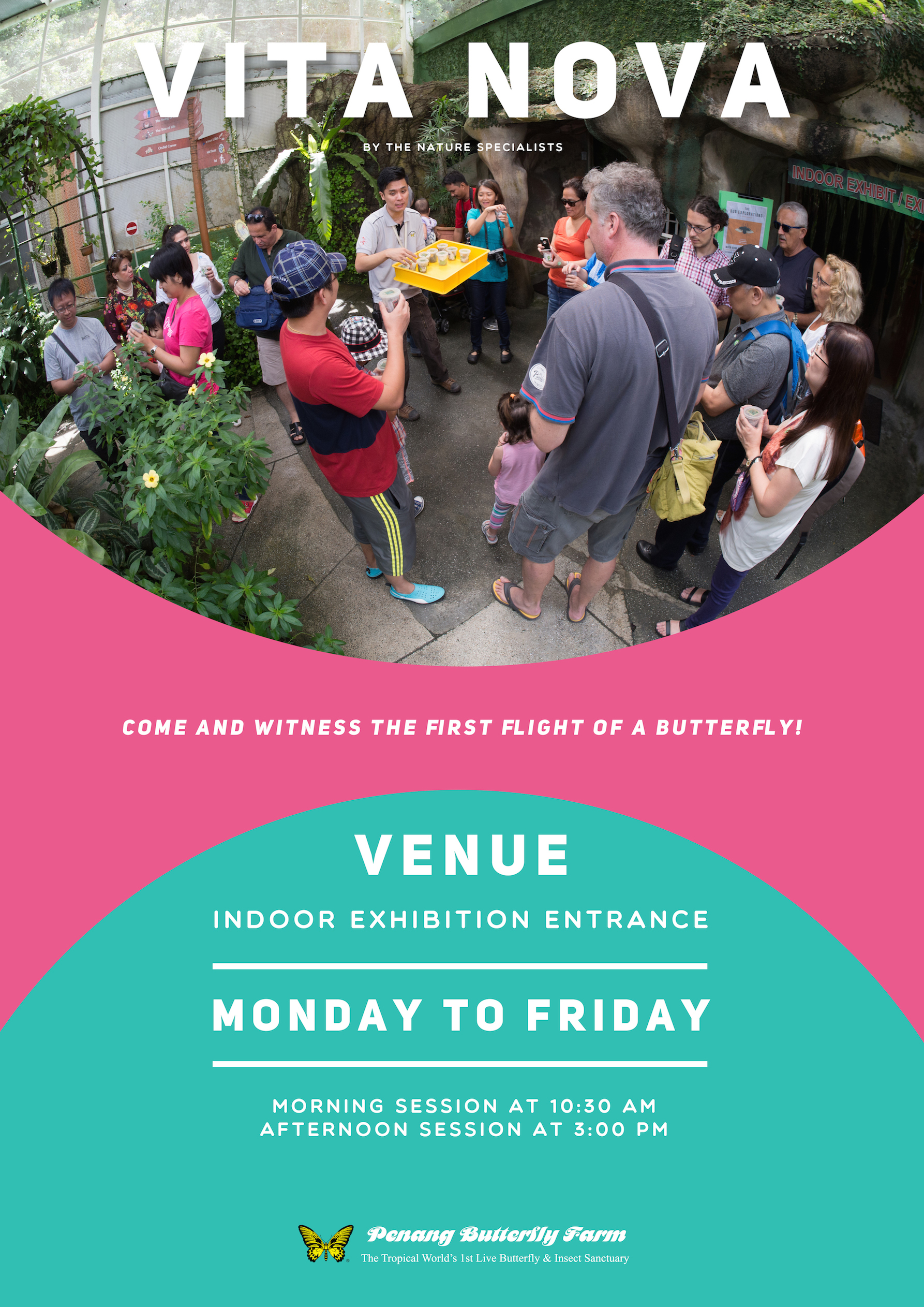
3 Exciting Activities For You
Are you planning a trip to Penang Butterfly Farm?
Here are the activities that you have to watch out for.
For an updated time schedule, don’t forget to check the schedule board at the Entrance Foyer.
Posted in Butterflies, Events & Workshops, Insects |
Trivia Answers on our Earth Day Campaign: Build You Own Butterfly Garden
We are celebrating Earth Day for 10 days with our 10 Acts of Green. As our Act of Green #8, we shared some tips on how to create your own butterfly garden on our Facebook and Twitter page and a few trivia questions as well.
Time to find out the answers to our trivia questions and see if you won a D.I.Y Your Own Butterfly Garden Booklet!
1. What kind of plants provide butterflies with sweet nutritious fluid for drinking?
Answer: Nectar Plants
2. Does using pesticide good for your butterfly garden?
Answer: No.
3. Where is Penang Butterfly Farm located?
Answer: Teluk Bahang, Penang
4. Aside from Nectar, what do male butterflies of some species need for nutrients?
Answer: Minerals
5. Name one weekday activity with the Nature Specialists at Penang Butterfly Farm.
Answer: Nature Talk or Vita Nova
6. Are butterflies good indicator of a healthy environment? Why?
Answer: Yes, a high number of butterflies mean that there are a high number of food plants and nectar plants in the ecosystem that benefits not only the butterflies but other animals as well.
7. As part of a global movement, what is Penang Butterfly Farm celebrating on 22 April 2014?
Answer: Earth Day
8. Why are butterflies and bees important to us?
Answer: Butterflies and bees help in pollination.
Without them plants won’t be pollinated and we won’t have fruits and vegetables.
9. Give one example of a butterfly host plant from our tip posted in our Facebook page.
Answer: (either of the following)
Aristolochia tagala Plant or Lime Plant
10. What is the name of the national butterfly of Malaysia?
Answer: Rajah Brooke’s Birdwing or Trogonoptera brookiana
Did you manage to answer all 10 questions correctly? Head on to Penang Butterfly Farm to claim your prize!
Posted in Butterflies, Events & Workshops, Nature's Motivation |
Gynandromorph Rajah Brooke’s Birdwing!
Painted Jezebel, August 10, 2012
Penang Butterfly Farm has a big surprise yesterday (9 August 2012) when a rare butterfly was spotted! Well, Rajah Brooke’s Birdwing may not be so rare but a gynandromorph one, sure is very rare!
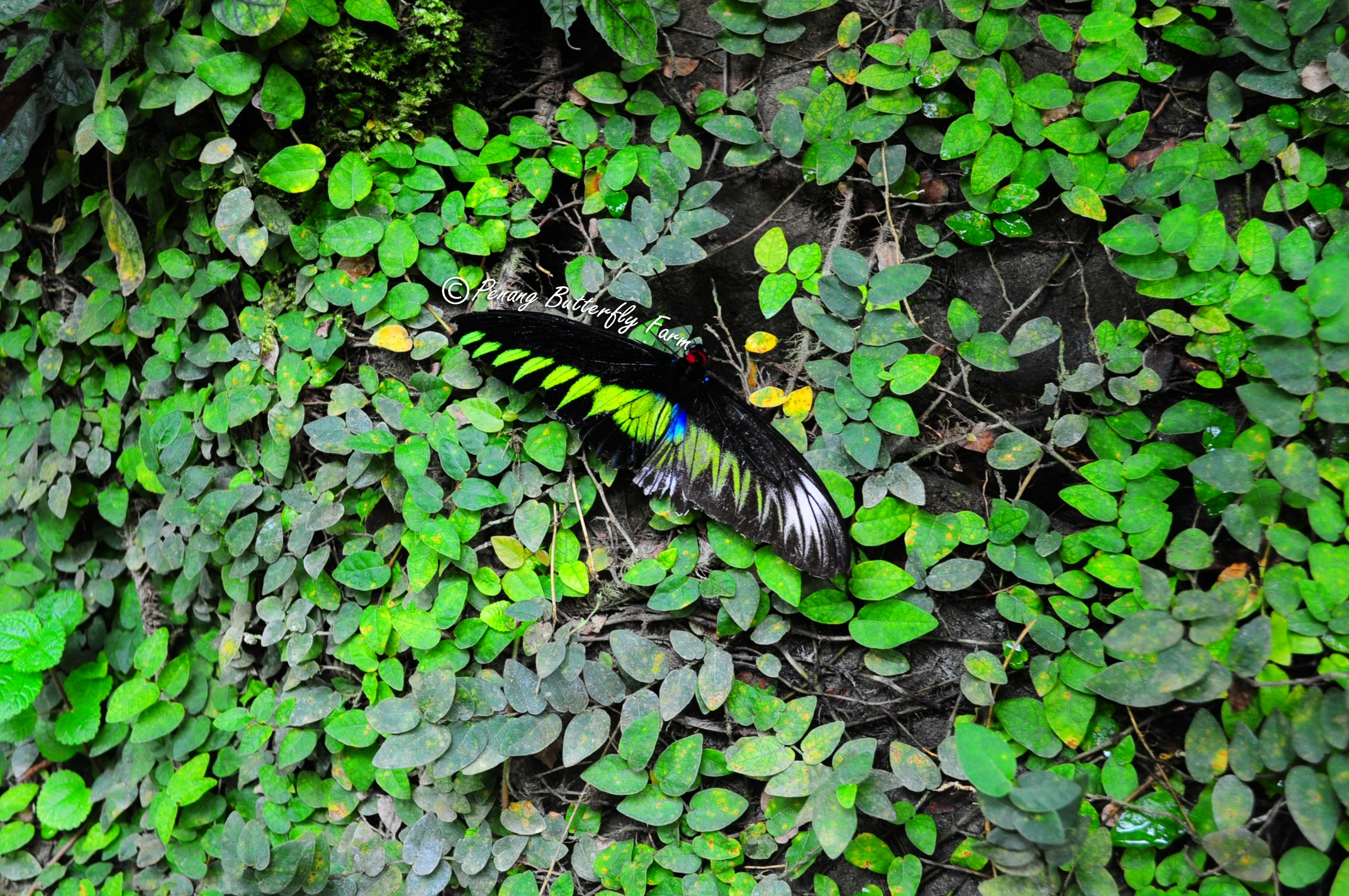
What is “gynandromorph”?
Gynandromorph refers to organisms that display both female & male traits. In other words, they are both male & female. This happens to butterflies but chances of finding them are rare. Here’s the comparison to the normal Rajah Brooke’s birdwing:
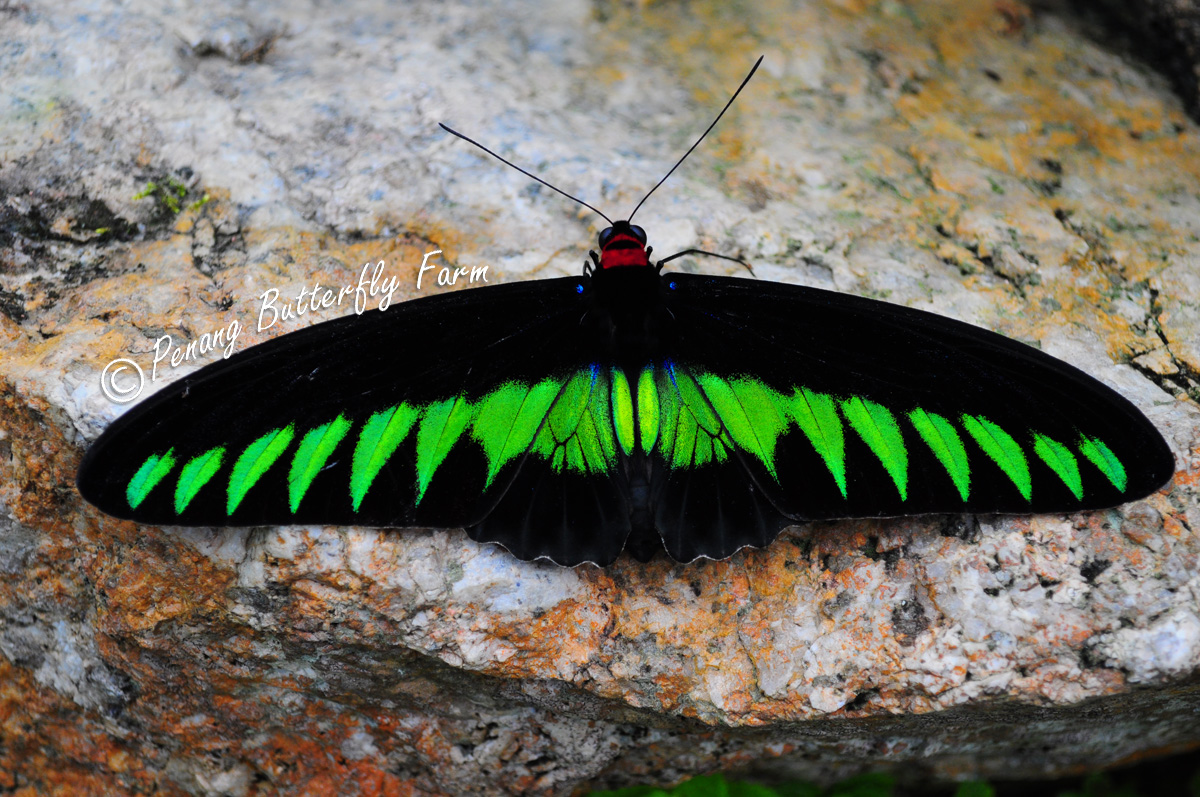
Male Rajah Brooke’s Birdwing
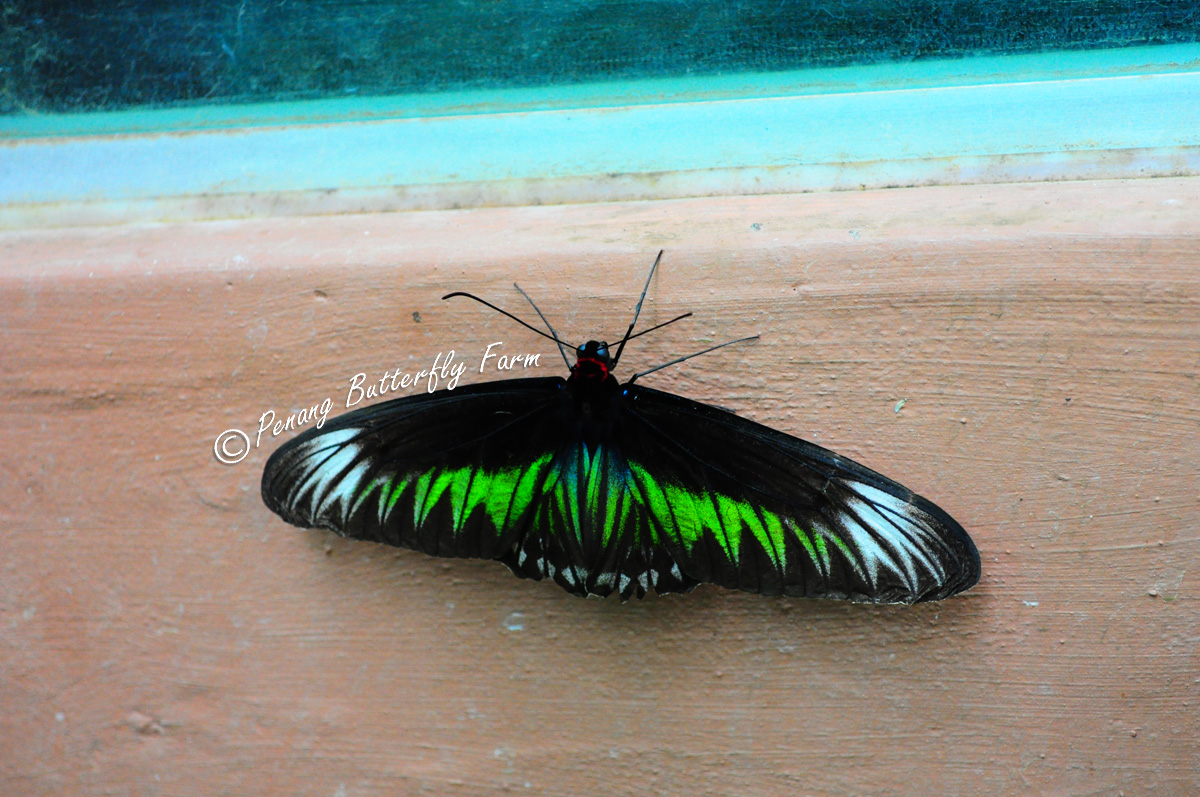
Female Rajah Brooke’s Birdwing
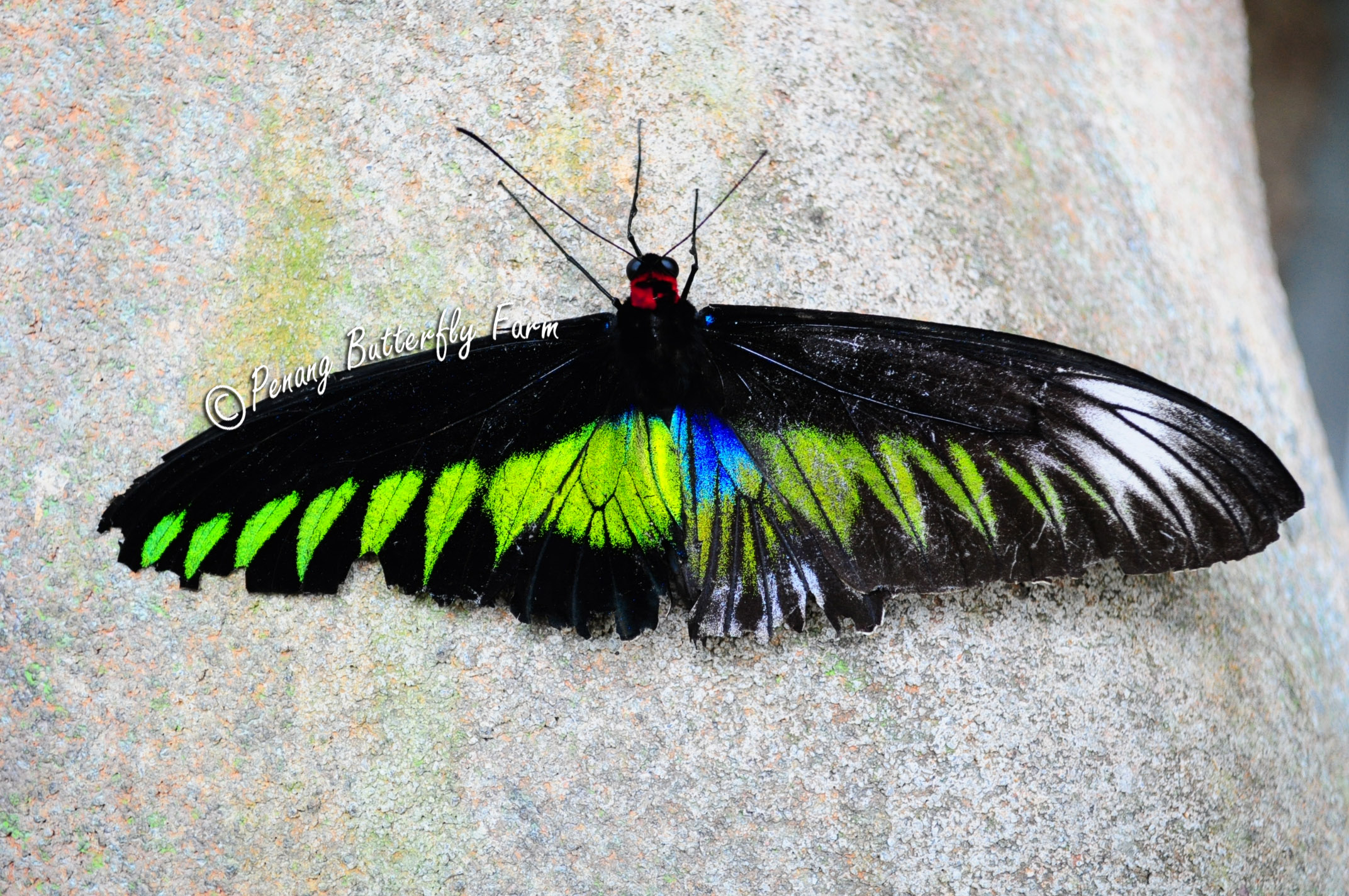
Gynandromorph Rajah Brooke’s Birdwing
Notice that the gynandromorph butterfly has the male feature on one wing and the female features on the other. This even applies to its abdomen, where it is male on one half and female in the other.
Gyandromorph butterflies are known to be infertile. That means they are unable to reproduce.
Nature comes in all shapes and sizes. Isn’t nature just amazing?
Posted in Butterflies, Insects, Latest News |
Pupae
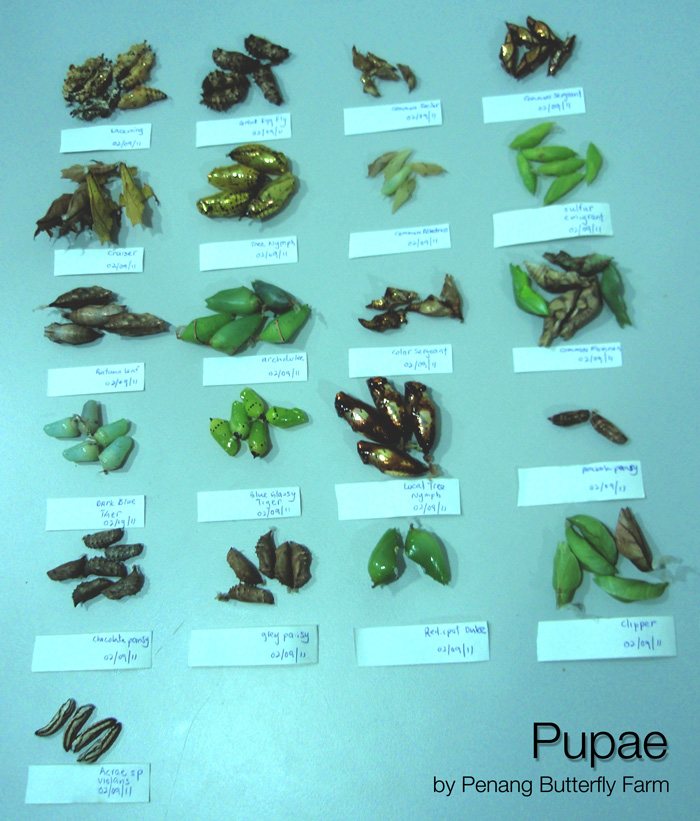
There are just many kinds of pupa, formed by different species of butterflies. This is to show you some of the pupae in different varieties that we farm. The “Cruiser” butterfly pupae are my favourite – guess which ones are they?
Posted in Butterflies |
Malaysia Day Special: Rajah Brooke’s Birdwing
Painted Jezebel, August 19, 2011

Trogonoptera brookiana, or more commonly known as the Rajah Brooke’s Birdwing, was first described in 1855 by a British naturalist, Alfred R. Wallace in Borneo.

Alfred Russel Wallace
He named the species in honour of James Brooke, the first Rajah of Sarawak. Up till today, this beautiful butterfly species is commonly known as the Rajah Brooke’s birdwing or The Rajah Brooke’s butterfly.

Sir James Brooke
The Rajah Brooke’s birdwing belongs to the group of butterflies in the family Papilionidae known as the ‘birdwings’ particularly because of their outstandingly big size, pointed wings and their bird-like flight. Apart from that, their resting state posture is unlike other butterflies. Here, this photo would explain it better than me:

The difference between the resting posture of birdwings and other butterflies.
The Rajah Brooke’s birdwing expresses sexual dimorphism, which means the male and female butterfly look different from one another.

The males need to sip in mineral-rich water, as they require sodium and potassium to activate their adult behaviour. Therefore, they are often seen congregating at riverbanks and mud puddles.

In the early years after its discovery, the encounter with the female Rajah Brooke’s birdwing is very rare, that it was thought that the ration between male and female is 1000:1. However, this is untrue. The females tend to fly at higher canopy, therefore minimizing the chance for its encounter.
The Rajah Brooke’s birdwing is one of the most promoted butterflies, particularly here in Malaysia as it is our National Butterfly. Visit Penang Butterfly Farm to see this beautiful ‘King’ live, right before your eyes! And don’t forget your camera!
Posted in Butterflies, Insects, Mother Nature |
Extinct Butterflies
Extinction isn’t a strange term to most of us. While extinction is known to be a natural phenomenon, and had happened before without any human intervention, the extinctions that occur in the recent millennia had been mainly human-induced. Dodo and Javan Tigers are some of the well-known example. Even butterflies did not manage to escape this mess. In this post we’re going to take a look at 3 species of the butterflies that you can no longer see fluttering around.
Xerxes Blue (Glaucopsyche xerxes)
First described by Boisduval in 1852, this beautiful butterfly was last seen between 1941 and 1943. The species is particularly found in Sunset District of San Francisco, USA. Thanks to urban development, the destruction of their habitat drove to them to extinction. The exact cause of their extinction is not known, since their food plant still exist. It is considered the first known butterfly to extinct in USA. Xerxes Blue received a lot of attention when they disappeared, but the attention came a little too late.
 Xerxes Blue – upperside
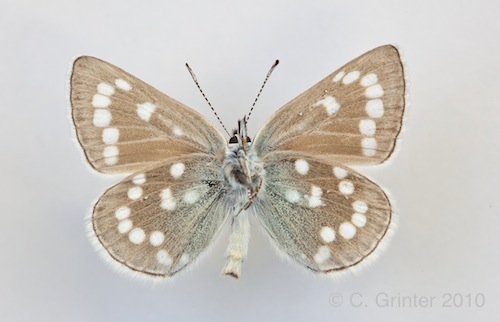 Xerxes Blue – underside
Photo by Chris Grinter (http://skepticalmoth.southernfriedscience.com/2010/08/butterfly-porn/)
Mbashe River Buff (Deloneura immacualata)
The species is endemic to Mbashe River of the East Cape, South Africa. Trimen described it in 1868 and apart from that, there is very little information about this species. The IUCN Red List of Threatened Species recorded no sighting of this species since 1986’s assessment and therefore considered listed it as extinct.
This is the only photo of the species found on the net, believed to be one of the olderst specimens in the Iziko South African Museum:
 Mbashe River Buff – underside
Photos by S. van Noort, Iziko (http://www.biodiversityexplorer.org/butterflies/lycaenidae/deloneura_immaculata.htm)
Morant Blue (Lepidochrysops hypopolia)
Morant’s Blue is the rarest butterfly in South Africa that IUCN Red List has categorized it under the extinct group since there were only 2 encounters of the species. Ever. The first was by Walter Morant in 1870, where he found 2 males and another by Thomas Ayres in 1879. You can read the detailed description on that in http://www.thorntree.co.za/Butterfly.htm. There are unfortunately no photos available of the species. However Morant’s specimens are one in the Natural History Museum, London while Ayres’ specimen is now at the South African Museum.
No one could explain how Morant Blue and Mbashe River Buff became extinct as they are already very rare by the time they caught the attention of entomologists. Just like Xerxes Blue, attentions came a little bit too late. Its a little too late to study them, understand them and save them.
Some scientists are still hopeful that these species still exist, somewhere. Nevertheless, the loss of these beautiful creatures is simply tragic. All we have left now is the preserved specimens, that would age, and sooner or later gone forever. All we have left for our children are photos and illustrations. Let this be the lesson for us to start to care more for our environment. Think about what how we utilize resources. Replenish what we’ve claimed. We’ve claimed their homes, now its time for us to rebuild them.
“We do not inherit the earth from our ancestors, we borrow it from our children.” ~Native American Proverb
Posted in Butterflies, Mother Nature |
Changi Butterfly Garden featured in Architect Concept

Changi Airport's T3 Butterfly Garden featured in Architect Concept magazine.
In 2008, we had consulted Changi Airport in creating a natural butterfly garden, and the project was recently highlighted in the landscaping section in the Architect Concept magazine. Thank you for featuring us!
Tags: 2008, airport butterfly garden, airport garden, changi airport, changi butterfly garden, changi t3, t3 butterfly garden
Posted in Butterflies, Habitat, Latest News |
翩翩蝶影 . 灿若星河 . Kim Sen School’s Butterfly Garden

《甘志明彩蝶苑》正式开幕! | Opening Ceremony of the Butterfly Garden at SRJK(C) Kim Sen, BM.
日前参与准备大山脚金星小学的《甘志明彩蝶苑》蝴蝶放飞造势活动,才惊觉现今的华小已经不再是念死书的纸上谈兵时代了。
在这所规模不小的校园内,有一位被人们称誉为 “蝴蝶妈妈”的老师,这位蝴蝶老师便是致力于研究与培育蝴蝶的沈幼清老师。由于沈老师对蝴蝶的热爱, 再加上郑丽爱校长的大力支持及前家教主席甘志明先生的慷慨赞助之下, 一股蝴蝶热潮就这样一呼百应下带动了全校上下总动员齐心合力地出钱出力创建这所校内蝴蝶园, 也为校园带来了另一番风景。
这所彩蝶苑不但可以美化校园,更让学生们亲眼目睹蝴蝶的真实生态及其生长过程,还可以参与蝴蝶培育及研究工作,这不但激发孩子们对自然科学的兴趣, 更身体力行地引领孩子接近大自然、认识大自然及关爱大自然的教育活动,实为其他学校的最佳典范!
槟城蝴蝶园有幸参与早期彩蝶苑的兴建过程,并从旁给于专业的意见,甚至延发至后期与金星小学进行彩蝶养殖交换计划。除了身体力行支援彩蝶苑的蝴蝶品种数量之外,从而也起到与本土学校相互交流的良好作用。
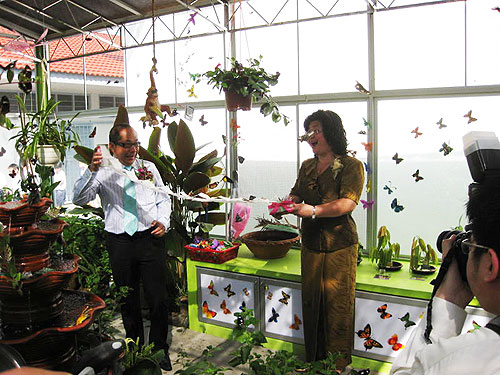
蝴蝶放飞造势活动 | Butterfly Release
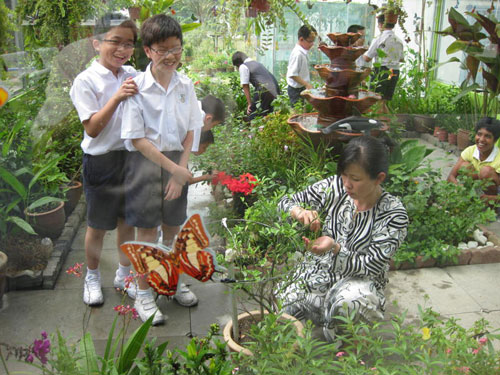
快乐蝴蝶园地为学生及老师们带来了无尽欢乐。| The butterfly garden brings joy to the students and teachers.
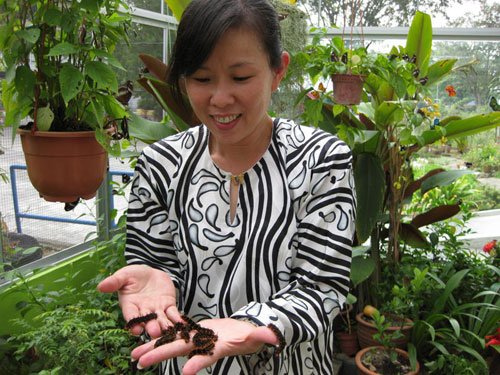
漂亮的蝴蝶老师对丑陋的毛毛虫付出无限的爱心。| Butterfly teacher and her caterpillars.
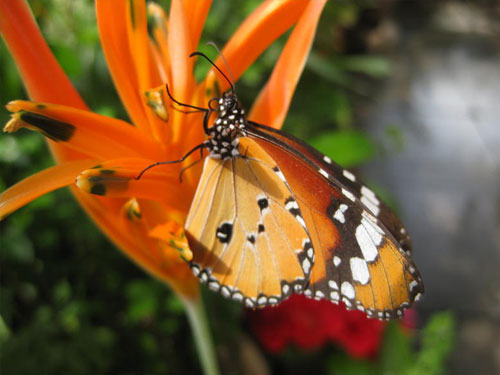
桦斑蝶 | Plain Tiger (Danaus chrysippus)
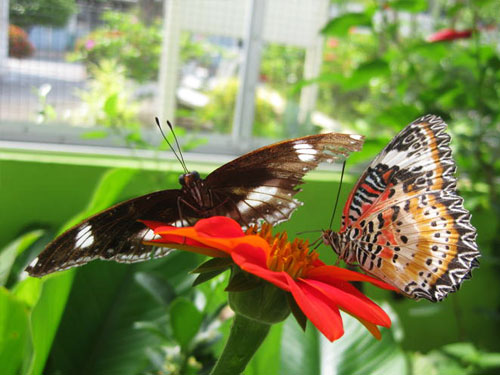
金星小学彩蝶苑的其中两位成员 | Butterflies at SRJK(C) Kim Sen, Bukit Mertajam.
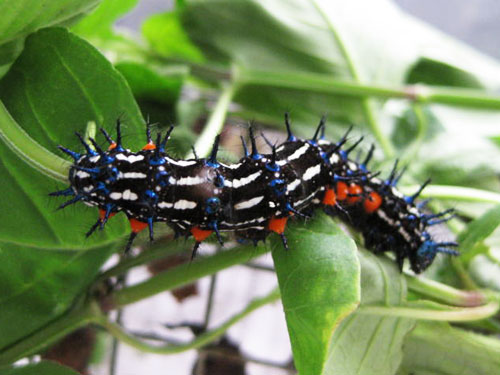
快乐毛毛虫 | Happy Caterpillar 🙂
Tags: Butterflies, butterfly garden
Posted in Butterflies, Latest News |
Some Butterflies Do Listen To You
Did you know that some butterflies have ears?
Scientists have just learnt more about the ears on the Morpho peleides…
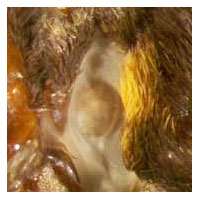
Here’s what the scientists said:
The ears of insects exhibit a broad functional diversity with the ability to detect sounds across a wide range of frequencies and intensities. In tympanal ears, the membrane is a crucial step in the transduction of the acoustic stimulus into a neural signal. The tropical butterfly Morpho peleides has an oval-shaped membrane at the base of the forewing with an unusual dome in the middle of the structure. We are testing the hypothesis that this unconventional anatomical arrangement determines the mechanical tuning properties of this butterfly ear. Using microscanning laser Doppler vibrometry to measure the vibrational characteristics of this novel tympanum, the membrane was found to vibrate in two distinct modes, depending on the frequency range: at lower frequencies (1–5 kHz) the vibration was focused at the proximal half of the posterior side of the outer membrane, while at higher frequencies (5–20 kHz) the entire membrane contributed to the vibration. The maximum deflection points of the two vibrational modes correspond to the locations of the associated chordotonal organs, suggesting that M. peleides has the capacity for frequency partitioning because of the different vibrational properties of the two membrane components. Extracellular nerve recordings confirm that the innervating chordotonal organs respond to the same frequency range of 1–20 kHz, and are most sensitive between 2 and 4 kHz, although distinct frequency discrimination was not observed. We suggest that this remarkable variation in structure is associated with function that provides a selective advantage, particularly in predator detection.
You can read more about it here.
Posted in Butterflies |